

Attic Insulation in NYC for an Energy-Efficient Home
Reduce Heat Loss and Maintain More Consistent Indoor Temperatures with Attic Insulation
Upstairs rooms that feel unbearably hot in summer or too cold in winter can make it difficult to stay comfortable at home. No matter how often you adjust the thermostat, the temperature may never feel right. It becomes frustrating when your heating and cooling system works harder without solving the problem. Attic insulation reduces unwanted heat transfer between your living space and the attic, while proper air sealing limits drafts. Prime Foam Solution identifies the areas that need attention and recommends suitable coverage to keep upstairs temperatures more consistent.
- Attic Floor & Roofline Insulation Options
- Air-Sealing Focused Insulation Plans
- Attic Ventilation & Moisture Awareness
- NYC Energy Code-Conscious Work
Prime Foam Solution
Reduce Upstairs Heat Loss with Better Attic Insulation for Your NYC Home
Existing attic insulation doesn’t always mean your home has enough protection against unwanted heat transfer. Some areas may have thin coverage, while gaps around ceiling openings allow conditioned air to escape. We know how disappointing it is to invest in home improvements and still struggle with rooms that never reach a comfortable temperature. Better attic insulation starts with identifying what the existing material fails to cover, rather than simply adding another layer.
You shouldn’t have to pay for an entirely new attic insulation system when only certain areas need work. Our approach focuses on the existing insulation level, air leaks, and the boundary between your attic and living space. We assess the areas that need attention and recommend suitable insulation materials for your home’s construction. You get a clear plan to improve upstairs comfort without paying to replace insulation that still works.

Prime Foam Solution
Insulation Services for Every Part of Your Attic
Attic floors, rooflines, and access openings require different treatments. Our attic insulation services address the areas that affect thermal performance, with attention to your attic’s layout, ventilation, and existing materials.


Attic Floor Insulation
Uneven or compressed insulation between attic floor joists can leave the rooms below exposed to unwanted heat transfer. Our attic floor insulation service focuses on suitable areas above your living space, including sections with missing or insufficient coverage. We recommend the appropriate material and insulation depth while keeping required ventilation paths clear for better thermal performance.

Attic Roofline Insulation
Finished attic rooms and certain roof assemblies need insulation along the roofline rather than across the attic floor. Roof construction plays an important role in material selection, especially where ventilation and moisture control are concerned. We assess suitable roofline areas before recommending insulation that supports indoor temperature control without interfering with the roof’s intended design.
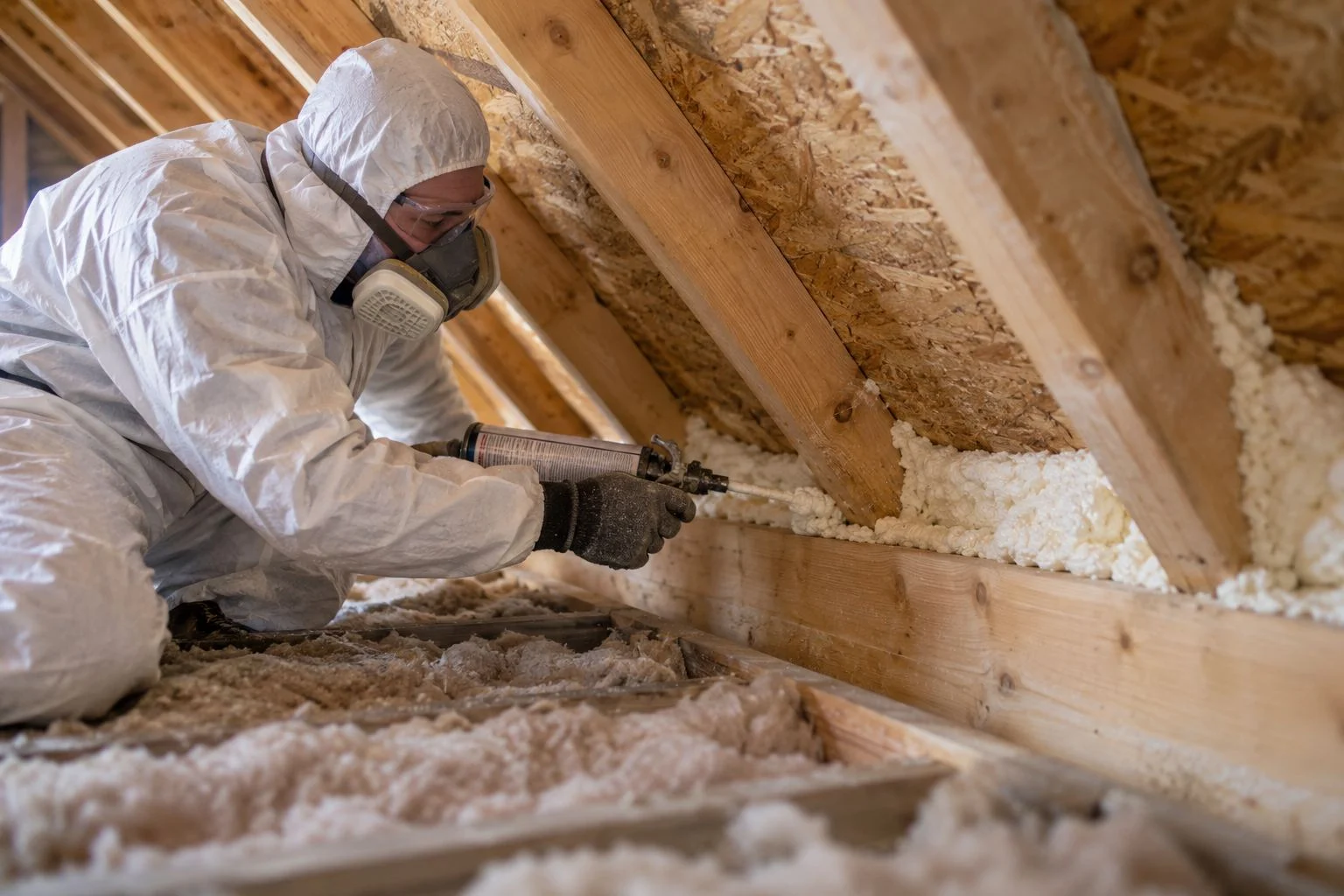
Attic Air Sealing
Small openings around ceiling penetrations, plumbing pipes, wiring, and attic framing can allow conditioned air to escape into the space above. Adding insulation alone may leave those air paths untreated. Our attic air-sealing work targets suitable gaps before new insulation is installed. Heat-producing fixtures and flues require appropriate clearances and approved sealing materials.
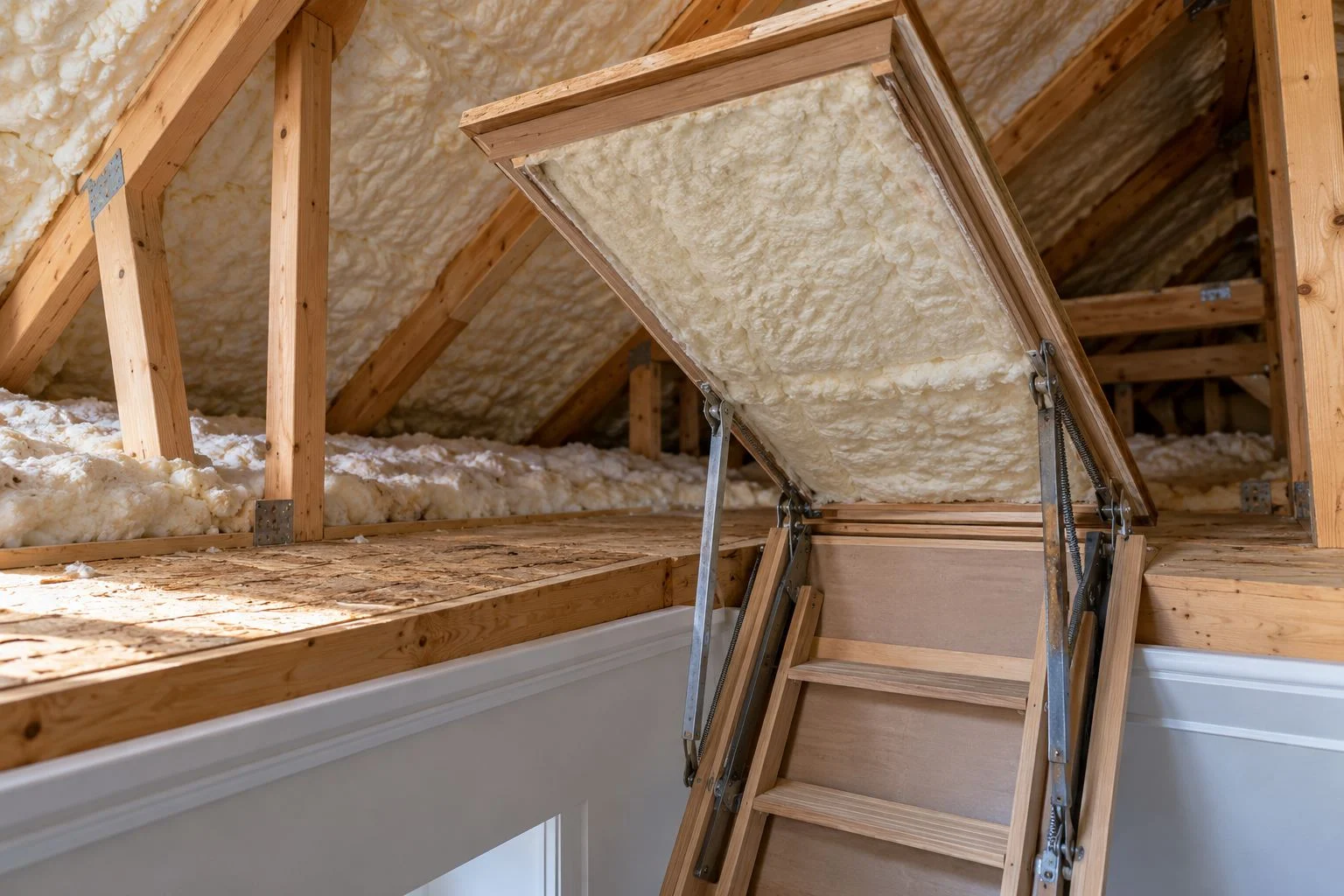
Attic Hatch and Stair Insulation
An attic hatch or pull-down staircase can allow unwanted air movement when the opening lacks proper insulation or a tight seal. Our attic access insulation service focuses on reducing heat transfer around suitable doors, covers, and access frames. Appropriate insulation and weatherstripping improve the separation between the living area and the unconditioned attic.

Existing Attic Insulation Replacement
Water-damaged, contaminated, or badly disturbed attic insulation may require removal before new material is installed. We review the affected areas to determine where replacement is appropriate and where existing insulation may remain in place. Once the attic’s underlying problems are addressed, suitable new insulation restores coverage to the required areas without unnecessary removal of usable materials.
Prime Foam Solution
Quality Workmanship Across Our Attic Insulation Projects
Searching for “Attic Insulation Near Me”?
Show us the areas that need attention. Our insulation team can discuss the appropriate attic work and provide a project-specific quote.
Prime Foam Solution
Fix Attic Insulation Gaps Before the Next Season
The next hot summer or cold winter will expose the same weak spots in your attic. Address missing insulation and air leaks now instead of dealing with another season of uncomfortable upstairs rooms.
Prime Foam Solution
Our Experts Choose the Right Attic Insulation Material for Your Home
Choosing insulation isn’t just about which material has the highest R-value. We consider the attic’s construction, existing coverage, available space, and the location of the insulation before recommending an option.
Spray Foam Attic Insulation
Spray foam is a suitable option for certain attic assemblies where thermal insulation and air sealing need to work together. Open-cell and closed-cell products have different properties, particularly regarding vapor resistance and insulation value per inch. Roofline conditions and the intended attic design determine whether spray foam is appropriate.
Fiberglass Batt Insulation
Attic floors with regular joist spacing may accommodate fiberglass batts or rolls. The material provides thermal resistance when fitted correctly, without compression or gaps around framing. Proper placement matters near attic edges, electrical fixtures, and other openings. Air leaks generally need separate sealing before the insulation is added.
Blown-In Cellulose Insulation
Loose-fill cellulose can cover irregular attic floor spaces and reach areas that are difficult to insulate evenly with batts. It is commonly used in vented attic assemblies after air sealing. Required insulation depth, existing material conditions, and unobstructed ventilation paths determine whether blown-in cellulose is an appropriate option.
Blown-In Fiberglass Insulation
For open attic floors with uneven spaces, blown-in fiberglass offers an alternative to traditional batts. The loose-fill material can spread across accessible areas to provide consistent thermal coverage. Installation depth must match the intended R-value, while attic ventilation openings and required clearances remain protected.
Prime Foam Solution
We Take the Right Steps for Better Attic Insulation
Attic insulation requires attention to more than the visible floor space. Our process focuses on existing conditions, safe access, correct material placement, and complete insulation coverage.
Check the Attic’s Existing Condition
We review accessible attic areas for insulation depth, exposed gaps, moisture concerns, and signs of damaged material. Attic layout and ventilation also influence the recommended work.
Confirm the Work Areas and Materials
Based on the attic’s condition, our team identifies which surfaces require insulation and which materials suit the application. The proposed work accounts for the required thermal performance, access points, and any preparation needs.
Prepare the Attic and Install Insulation
Before installation, suitable air leaks and necessary preparation areas receive attention. Insulation is applied or placed according to the selected material’s requirements, with proper clearance around vents, heat-producing equipment, and other protected areas.
Review the Completed Attic Coverage
After installation, we review the treated areas for gaps, appropriate material depth, and clear ventilation paths. Necessary cleanup and product-specific safety precautions form part of the completion process. Spray foam projects also require the manufacturer’s curing and re-entry procedures.
Prime Foam Solution
Address Insulation Gaps Without Replacing Everything
Old insulation doesn’t always need to be removed completely. Your attic may already have usable material that requires better coverage or additional insulation. At Prime Foam Solution, we focus on what needs improvement before recommending replacement.
Keep Insulation That Still Works
Existing material may remain in place when it is dry, undamaged, and suitable for the proposed upgrade. Our recommendations account for its condition and compatibility with the new insulation.
Address Areas That Have Lost Coverage
Disturbed insulation, exposed joists, and empty sections can affect the attic’s thermal performance. We identify suitable areas for additional insulation rather than recommend unnecessary work across the entire floor.
Know When Replacement Is Necessary
Wet insulation, contamination, and suspected hazardous materials require appropriate evaluation before work begins. Our team can identify concerns that need further assessment or specialist treatment before new insulation is installed.
Prime Foam Solution
Local Attic Insulation Services for NYC Homeowners
From older townhouses with unfinished attics to homes with finished upper floors, NYC properties have different insulation needs. We assess your attic's layout, existing insulation, and ventilation to recommend suitable solutions. Prime Foam Solution serves homeowners across NYC's five boroughs, with a focus on the areas that need better insulation coverage.
Our proposed service areas include:
Need Attic Insulation in Your Neighborhood? Share your property location to confirm service availability and discuss suitable insulation options.
- Brooklyn: Park Slope, Williamsburg, Bay Ridge, Bedford-Stuyvesant, and surrounding neighborhoods.
- Manhattan: Upper West Side, Harlem, Chelsea, Washington Heights, and nearby areas.
- Queens: Astoria, Flushing, Forest Hills, Jamaica, and neighboring communities.
- The Bronx: Riverdale, Fordham, Mott Haven, Pelham Bay, and surrounding areas.
- Staten Island: St. George, New Dorp, Great Kills, Tottenville, and nearby neighborhoods.
Prime Foam Solution
Why NYC Homeowners Trust Us for Attic Insulation
Attic-Specific Insulation Assessments:
We review existing material, attic access, and insulation gaps before recommending work.
Attic Floor & Roofline Planning:
The attic’s design determines which areas need thermal insulation.
Air Sealing Before Insulation:
Suitable openings receive attention before additional insulation covers the area.
Ventilation-Aware Installation:
Our recommendations account for necessary attic airflow and protected vent openings.
Material Selection Based on Your Attic:
Insulation options are considered according to available space, construction, and required performance.
Existing Insulation Evaluation:
Usable material may remain in place instead of being removed without a clear reason.
Attention to NYC Energy Requirements:
Applicable insulation standards influence material depth and project planning.
Clear Project Recommendations:
We explain which areas need insulation, what work is proposed, and why it matters.
Prime Foam Solution
Frequently Asked Questions
How much does attic insulation cost in NYC?
Attic insulation prices depend on the area, material, required R-value, and accessibility. Spray foam, fiberglass batts, and blown-in insulation have different material and labor costs. Air sealing, damaged insulation removal, and attic access improvements may affect the estimate. A project quote should identify the proposed coverage and work required.
What is the best insulation for an attic?
The best attic insulation depends on the attic’s construction, ventilation, existing materials, and intended use. Fiberglass batts and blown-in insulation are common choices for vented attic floors. Spray foam may suit certain roofline assemblies where air sealing and thermal insulation are both required.
Is spray foam better than blown-in attic insulation?
Spray foam and blown-in insulation serve different purposes. Spray foam can create an air barrier at the required thickness, while blown-in fiberglass or cellulose provides thermal coverage across suitable attic floors. The appropriate option depends on the insulation location, required R-value, moisture conditions, and project budget.
Should attic insulation go on the floor or roofline?
Attic floor insulation is common when the attic remains unconditioned and ventilated. Roofline insulation may be appropriate for certain finished attics or approved conditioned attic designs. Roof construction, air sealing, ventilation, and moisture control determine the suitable location. Both approaches should not be combined without a proper building-assembly plan.
Can new attic insulation be installed over old insulation?
Yes, new insulation can often be added over existing material when it is dry, undamaged, and compatible with the proposed upgrade. Wet, moldy, contaminated, or unsuitable insulation may require removal. Existing attic conditions should be assessed before additional material covers the old insulation.
Should attic air leaks be sealed before insulation installation?
Yes. Major openings around plumbing, wiring, ceiling penetrations, and other suitable areas should be sealed before attic insulation is added. Fiberglass and cellulose insulation do not replace proper air sealing. Flues, recessed lights, and heat-producing fixtures require approved materials and appropriate safety clearances.
Does an attic hatch or staircase need insulation?
Yes, attic access points often need insulation and weatherstripping because they separate conditioned rooms from the unconditioned attic. Suitable hatch covers, insulated access panels, and properly sealed frames reduce unwanted heat transfer and air leakage. The selected treatment depends on the access design.
Will attic insulation block roof ventilation?
Properly installed attic insulation should preserve required roof ventilation. In vented attics, insulation must not block soffit vents or other designated airflow paths. Baffles or similar components may be necessary to maintain airflow near the roof edges. Unvented roof assemblies require a different approved design.
How long does attic insulation installation take?
Installation time depends on the attic’s size, access, existing insulation, material choice, and preparation requirements. An accessible attic with minor upgrades may need less work than an attic that requires extensive air sealing or damaged-material removal. Spray foam curing and safe re-entry requirements may extend the overall schedule.
How do I choose attic insulation contractors near me in NYC?
Choose an attic insulation contractor who can assess existing coverage, explain material options, and provide a clear project scope. Ask about attic ventilation, air sealing, insulation depth, safety procedures, and applicable NYC requirements. Verify company credentials, reviews, and the proposed installation details before booking.
Prime Foam Solution
Get Your Attic Insulated Before Another Uncomfortable Season
Another seasonal temperature change shouldn’t leave you uncertain about why your upstairs rooms remain uncomfortable. Get the attic areas that need attention assessed and choose insulation suited to your home’s construction. Prime Foam Solution can discuss your existing coverage, insulation options, and the next steps for your attic project.