

Crawl Space Insulation in NYC for Better Floor Comfort
Control Drafts and Reduce Heat Transfer Through Crawl Spaces
Cold floors, drafts near the base of your walls, and musty odors can make your home uncomfortable. You might increase the temperature, but the rooms above your crawl space still feel cold. It becomes frustrating when the problem continues, and you cannot tell what is happening beneath your home. Crawl space insulation reduces heat transfer through suitable floors and foundation walls, while air sealing limits unwanted drafts. Prime Foam Solution assesses the space below your home and recommends suitable insulation to improve floor comfort and address the areas that need attention.
- Crawl Space Wall & Floor Insulation
- Moisture & Air Leakage Assessments
- R-Value-Based Insulation Recommendations
- NYC Energy & Fire Code Awareness
Prime Foam Solution
Reduce Hidden Air Leaks with Crawl Space Insulation in NYC
Cold air can enter through openings near the foundation and beneath the floor, leaving your heating system to work harder. We know how uncomfortable it is to walk across cold floors when the rest of your home feels warm. In many residential properties, the source lies beneath the living area, where missing insulation and exposed framing allow unwanted heat transfer.
Covering the floor with more material may not address every problem, especially when foundation conditions or air leaks need attention. Before recommending insulation, our team looks at the crawl space’s existing condition, ventilation, and available access. Prime Foam Solution focuses on the areas that need insulation and the issues that should be addressed first. The result is a clear plan for better thermal protection without unnecessary work beneath your home.

Prime Foam Solution
Crawl Space Insulation Services That Address Problems Beneath Your Home
Crawl spaces contain foundation walls, exposed joists, and openings that require different insulation treatments. Our services focus on the areas that affect the floor above and the thermal protection of your home.
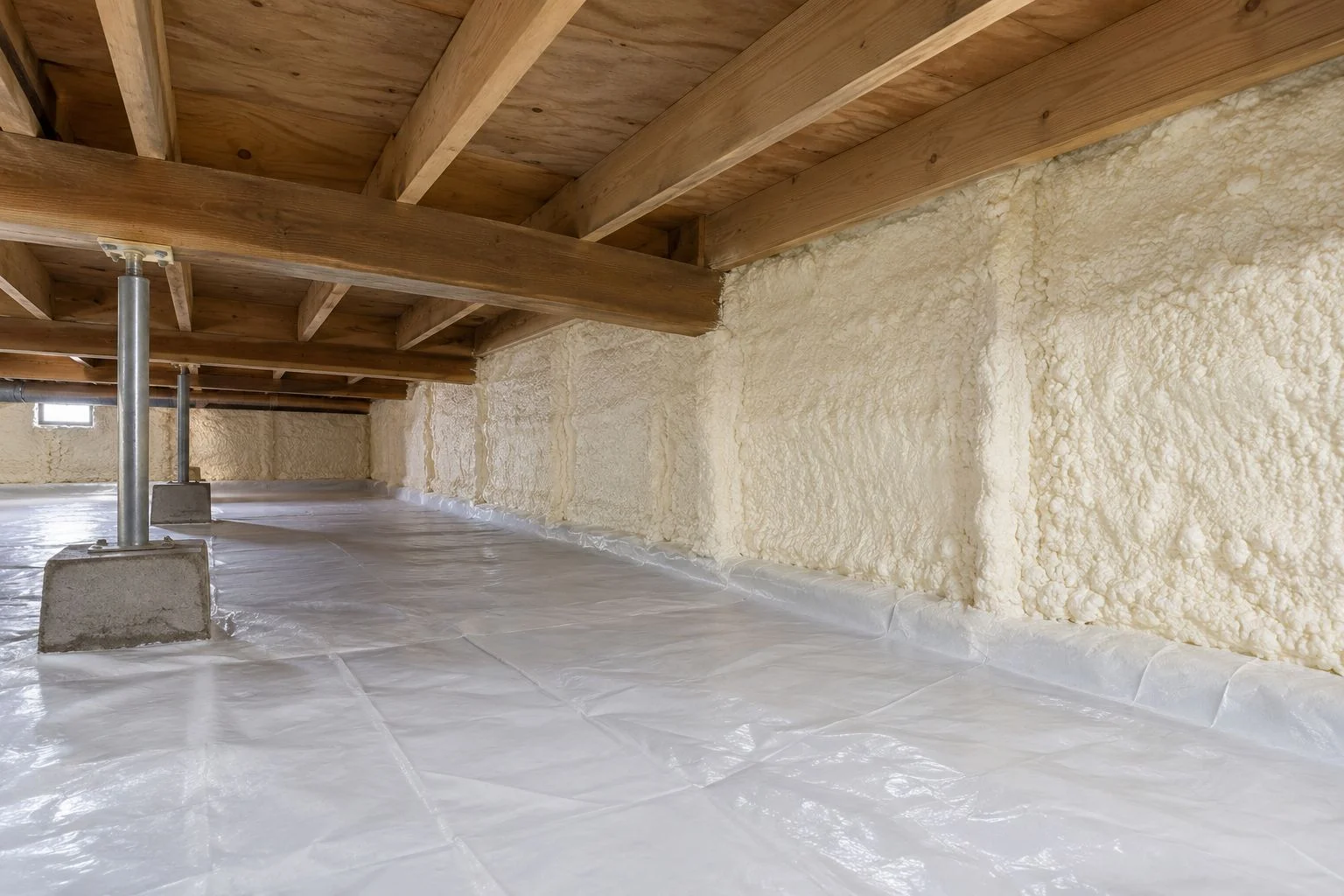

Crawl Space Wall Insulation
Foundation walls can allow unwanted heat transfer when an enclosed crawl space lacks suitable insulation. For crawl spaces designed to remain within the home’s insulated boundary, we consider wall materials, moisture conditions, and required insulation depth. Suitable wall insulation reduces heat transfer through the foundation while accounting for the space’s ventilation and moisture-control requirements.

Crawl Space Floor Joist Insulation
Floors above unheated crawl spaces may remain cold because the joist cavities below them lack insulation. Our floor insulation service focuses on suitable exposed areas beneath the subfloor. Material placement must account for gaps, existing pipes, and the floor’s air barrier. Better insulation reduces heat transfer through the floor and improves comfort in the room above.

Rim Joist Insulation
Gaps where the floor framing meets the foundation can allow cold air into the home. Rim joists often contain small openings that ordinary insulation may leave untreated. We use suitable foam insulation to address accessible framing joints and edges. Proper coverage reduces air leakage at these connections without requiring insulation throughout the entire crawl space.

Crawl Space Air Sealing
Small openings around plumbing lines, electrical penetrations, and foundation joints can allow unwanted air movement beneath your floors. Our air-sealing recommendations focus on suitable gaps in the building’s thermal boundary. Sealing these areas reduces drafts and supports the performance of nearby insulation. Required ventilation and combustion-air openings must remain protected.
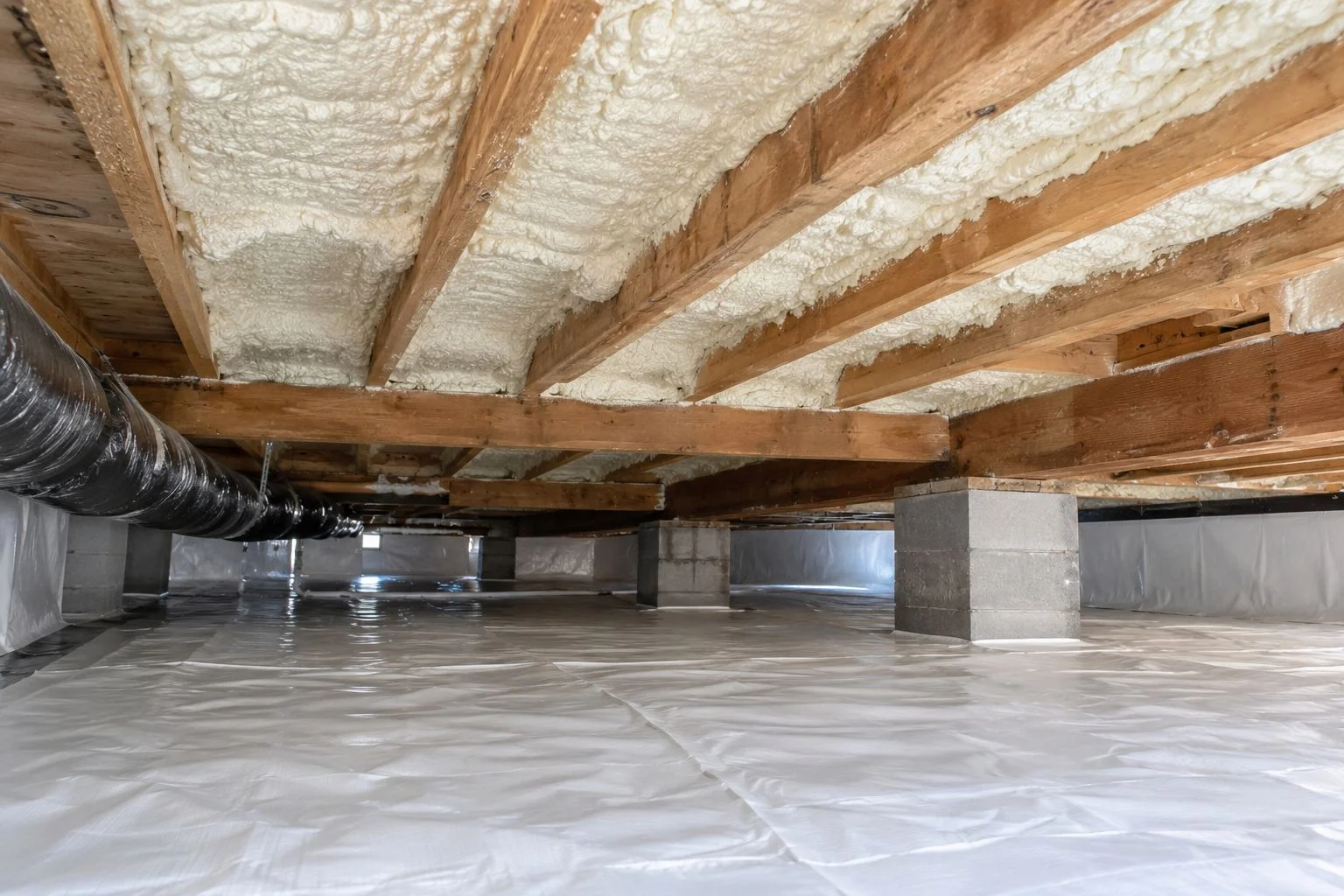
Existing Crawl Space Insulation Replacement
Loose, sagging, or moisture-damaged insulation may no longer provide the intended coverage beneath your floor. Before new material is installed, existing insulation should be checked for damage and the cause of any moisture problems. Prime Foam Solution can assess the condition and recommend suitable replacement areas while avoiding unnecessary removal of insulation that remains usable.
Prime Foam Solution
Results from Our Crawl Space Insulation Projects
Have Cold Floors or Exposed Joists at Home?
Share your crawl space details with our insulation team to discuss suitable coverage and the work your property may require.
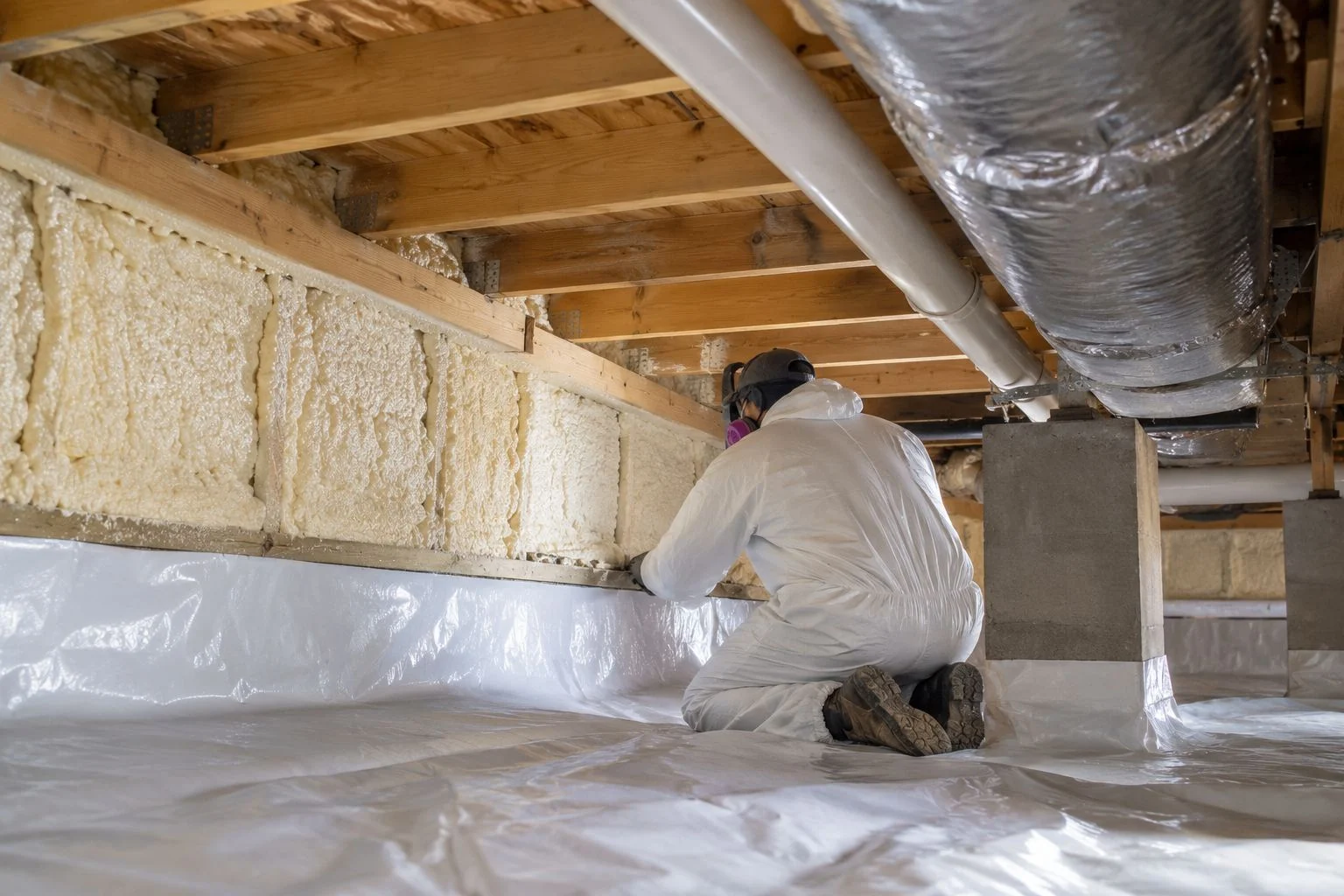
Illustrative image of an insulation application.
Prime Foam Solution
Address Damaged Crawl Space Insulation Before Problems Grow
Wet or sagging insulation can leave floors exposed to heat loss and keep moisture near wooden framing. Delaying the work may increase the amount of material that needs replacement. Have the affected areas assessed before the damage spreads.
Prime Foam Solution
Moisture Checks Before We Insulate Your Crawl Space
Crawl space insulation should not cover water damage or trap moisture against building materials. Our recommendations account for the conditions beneath your home before new insulation is selected.
- Standing Water: Existing water entry and drainage problems need correction before insulation work begins.
- Damp Floor Joists: Moisture-affected wood requires evaluation before foam or other insulation covers the surface.
- Ground Moisture: Exposed soil may require a suitable vapor barrier to reduce moisture movement into the crawl space.
- Existing Mold or Damage: Visible mold, wood decay, and damaged materials may require separate treatment before installation.
- Ventilation Conditions: The insulation plan must account for whether the crawl space is designed to remain vented or enclosed.
Prime Foam Solution
Crawl Space Insulation Options We Recommend
Different insulation materials serve different purposes beneath your home. We consider the crawl space’s design, available depth, and moisture conditions before recommending an option.
01
Closed-Cell Spray Foam Insulation
Closed-cell spray foam offers high thermal resistance per inch and greater resistance to water vapor movement. It is suitable for certain foundation walls, rim joists, and floor assemblies. Our recommendations account for the surface condition, required insulation thickness, and applicable fire protection requirements before foam is applied.
02
Rigid Foam Board Insulation
Rigid foam boards provide thermal insulation across suitable foundation walls and other approved crawl space surfaces. The boards must be compatible with existing moisture conditions and properly fitted to the intended assembly. We consider board thickness, joints, and required protective materials before recommending this insulation option.
03
Fiberglass Batt Insulation
Fiberglass batts can insulate suitable floor cavities above an unconditioned crawl space. Proper support keeps the material in place and in contact with the required air barrier. Damp or poorly supported batts may lose effectiveness, making existing conditions important when deciding whether fiberglass is appropriate.
Prime Foam Solution
Our Process for Safe Crawl Space Insulation Installation
Limited working space, exposed utilities, and existing moisture conditions can affect crawl space insulation work. Our installation approach focuses on safe access, suitable materials, and coverage at the intended insulation boundary.
1. Review the Crawl Space Conditions
We check accessible foundation walls, exposed framing, existing insulation, and visible moisture concerns. Available clearance and the location of utilities help determine which areas can receive insulation.
2. Confirm the Insulation Location
Floor insulation and crawl space wall insulation serve different building designs. Our team determines which approach suits the intended thermal boundary and considers the required insulation depth.
3. Prepare and Install the Material
Surfaces receive the preparation required for the selected product. Suitable insulation is placed or applied in accessible areas, with attention to utilities, necessary ventilation, and required safety clearances.
4. Review Coverage and Complete the Work
After installation, we check accessible treated areas for gaps and appropriate insulation placement. Cleanup and product-specific safety precautions complete the work. Spray foam applications require manufacturer-recommended curing and safe re-entry procedures.
Prime Foam Solution
Crawl Space Insulation with NYC Code and Safety Checks
New York City building requirements address crawl space insulation, air sealing, ground moisture barriers, and foam fire protection. Our insulation recommendations consider the standards that apply to the property and proposed work.
- NYC Energy Code Requirements: Insulation along crawl space walls or the floor above must follow the applicable 2025 NYC Energy Conservation Code.
- Ground Vapor Barrier Requirements: Applicable unvented crawl space assemblies require a suitable ground vapor retarder and air barrier.
- Foam Insulation Fire Protection: NYC Building Code Section BC 2603 establishes fire protection requirements for foam insulation, including crawl space applications.
- Ventilation and Building Safety: Crawl space ventilation, combustion appliances, and access requirements must remain compatible with the approved building design.
Prime Foam Solution
Crawl Space Insulation Services Across New York City
From older row houses with limited access beneath the floor to single-family homes with exposed crawl space foundations, New York City properties have different insulation requirements. We consider access, foundation construction, and existing conditions when discussing suitable applications.
Our proposed service areas include:
Need Crawl Space Insulation in Your Neighborhood? Share your property location to confirm service availability and discuss the work needed beneath your home.
- Brooklyn: Park Slope, Williamsburg, Bay Ridge, Bedford-Stuyvesant, and surrounding neighborhoods.
- Manhattan: Upper West Side, Harlem, Chelsea, Washington Heights, and nearby areas.
- Queens: Astoria, Flushing, Forest Hills, Jamaica, and neighboring communities.
- The Bronx: Riverdale, Fordham, Mott Haven, Pelham Bay, and surrounding areas.
- Staten Island: St. George, New Dorp, Great Kills, Tottenville, and nearby neighborhoods.
Prime Foam Solution
Why Choose Prime Foam Solution for Crawl Spaces?
Crawl Space Condition Assessments:
We review accessible framing, foundation surfaces, and existing insulation before recommending work.
Floor or Wall Insulation Planning:
The crawl space’s design determines where the thermal insulation belongs.
Moisture-Conscious Material Selection:
Existing dampness and surface conditions are considered before insulation is installed.
Attention to Rim Joist Gaps:
Suitable framing joints receive attention where air leakage can affect the rooms above.
Insulation for Limited Spaces:
Our recommendations account for low clearance and restricted access beneath the home.
Existing Insulation Evaluation:
Replacement recommendations focus on damaged or unsuitable materials.
NYC Code-Conscious Planning:
Applicable energy, ventilation, and foam fire protection requirements inform the proposed work.
Clear Project Recommendations:
Our team explains the insulation areas, material options, and any preparation needed before installation.
Prime Foam Solution
Frequently Asked Questions
How much does crawl space insulation cost in NYC?
Crawl space insulation prices depend on the size of the treated area, material choice, access, and existing conditions. Floor insulation and foundation wall insulation may have different costs. Moisture repairs, damaged insulation removal, or vapor barrier work can affect the project total. An estimate should identify the insulation scope and required preparation.
Should crawl space insulation go on the floor or walls?
The correct location depends on the crawl space design. Vented, unconditioned crawl spaces commonly use insulation beneath the living-area floor. Suitable enclosed or conditioned crawl spaces may use insulation along the foundation walls. Ventilation, moisture conditions, and the intended thermal boundary determine which approach is appropriate.
Is spray foam insulation suitable for crawl spaces?
Yes, spray foam can be suitable for certain crawl space walls, rim joists, and floor assemblies. Closed-cell foam is often considered where higher thermal resistance and greater vapor resistance are useful. Material selection depends on surface conditions, required thickness, moisture management, and applicable fire safety requirements.
Does crawl space insulation require a moisture barrier?
Crawl spaces with exposed soil generally benefit from a suitable ground moisture barrier. Applicable unvented designs require a continuous vapor retarder under the relevant energy code provisions. Insulation alone does not prevent moisture from entering through exposed ground, and existing drainage problems require separate attention.
What is the difference between crawl space encapsulation and insulation?
Crawl space insulation reduces heat transfer through floors or foundation walls. Encapsulation is a broader moisture-control approach that may include ground liners, sealed openings, conditioning, and humidity control. Some homes require both, but the appropriate arrangement depends on the crawl space’s construction and moisture conditions.
Can fiberglass insulation be used beneath crawl space floors?
Yes, fiberglass batts can insulate suitable floor cavities above unconditioned crawl spaces. The material must fit correctly, remain supported, and work with the floor’s air barrier. Existing moisture problems should be corrected before installation because damp or sagging insulation can perform poorly.
Will crawl space insulation eliminate musty odors?
Insulation alone does not eliminate musty odors caused by moisture, mold, or water damage. Existing sources must be identified and addressed before new insulation is installed. Proper moisture management may be necessary alongside insulation improvements to reduce conditions that contribute to odors.
Should crawl space vents be sealed during insulation work?
Crawl space vents should only be sealed when the complete building design supports an approved enclosed or conditioned crawl space. A vented crawl space requires a different insulation approach. Closing vents without proper moisture control, combustion safety, and ventilation planning can create problems.
Can attic and crawl space insulation be completed during the same home upgrade?
Yes, both areas can be included in one insulation project when the work is suitable for the property. Attics and crawl spaces have different thermal boundaries, materials, and preparation needs. The combined project scope should identify the insulation required for each area rather than apply the same method to both.
Prime Foam Solution
Address Cold Floors at the Source with Crawl Space Insulation
Cold floors and damaged insulation beneath your home deserve attention at the source. Prime Foam Solution can review suitable crawl space areas, explain the available insulation options, and recommend the work your property needs. Take the next step toward better floor comfort without unnecessary replacement.