

Soundproofing Insulation in NYC to Reduce Unwanted Noise
Improve indoor comfort with insulation that helps limit sound transfer through walls, ceilings, and shared spaces.
Hearing conversations through shared walls or television noise from another room can make it difficult to relax at home. Turning up your own TV or rearranging furniture may do little to solve the problem. We understand how important privacy is, especially when you share walls or floors with other people. Soundproofing insulation absorbs some airborne noise within suitable walls, ceilings, and floors. Prime Foam Solution focuses on the areas where insulation can improve sound control, without recommending unnecessary work.
- Wall & Ceiling Sound Insulation Options
- Sound-Absorbing Material Recommendations
- Noise-Specific Insulation Assessments
- NYC Sound & Fire Code Awareness
Prime Foam Solution
Want Peace at Home? Soundproofing Insulation Reduces Noise and Improves Privacy
Private conversations shouldn’t be heard clearly in the next room. Homes with shared bedrooms, home offices, or thin interior partitions can make everyday activities difficult to keep private. We know how disruptive this becomes when everyone has to lower their voice or change their routine to avoid disturbing others. Missing insulation inside wall cavities may contribute to the problem, but gaps and the wall’s construction can affect how much sound passes through.
Spending money on acoustic materials that don’t address the source of the noise can be disappointing. Before recommending insulation, our team considers the type of sound, the existing wall or floor structure, and the areas that allow noise to travel. Some spaces benefit from sound-absorbing insulation, while others need additional sound-control measures. You receive recommendations based on what can improve privacy in your home, rather than a promise that insulation alone will block every sound.
Prime Foam Solution
Sound Insulation Services for a Quieter Home
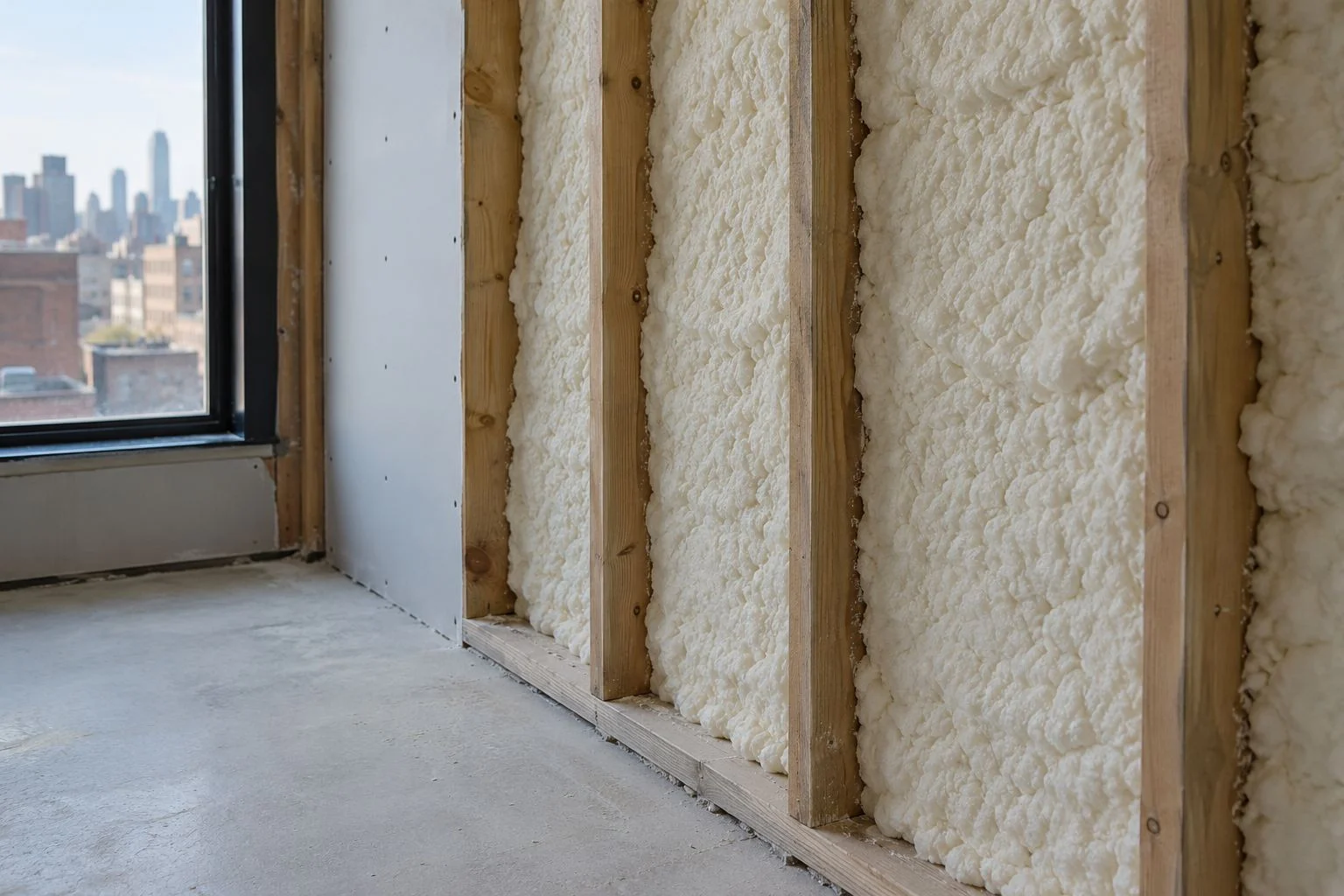
Noise can travel through several parts of a home, and each area may need a different solution. Our residential sound insulation services focus on suitable wall, floor, and ceiling assemblies where improved sound absorption can make a practical difference.


Interior Wall Sound Insulation
Bedrooms beside busy living rooms or home offices may offer little privacy when interior walls have empty cavities. Our interior wall insulation service focuses on sound absorption between suitable partitions. Fibrous insulation can reduce sound transmission when combined with appropriate wallboard and framing. The recommended material depends on cavity depth and the wall’s existing construction.
Shared Apartment Wall Insulation
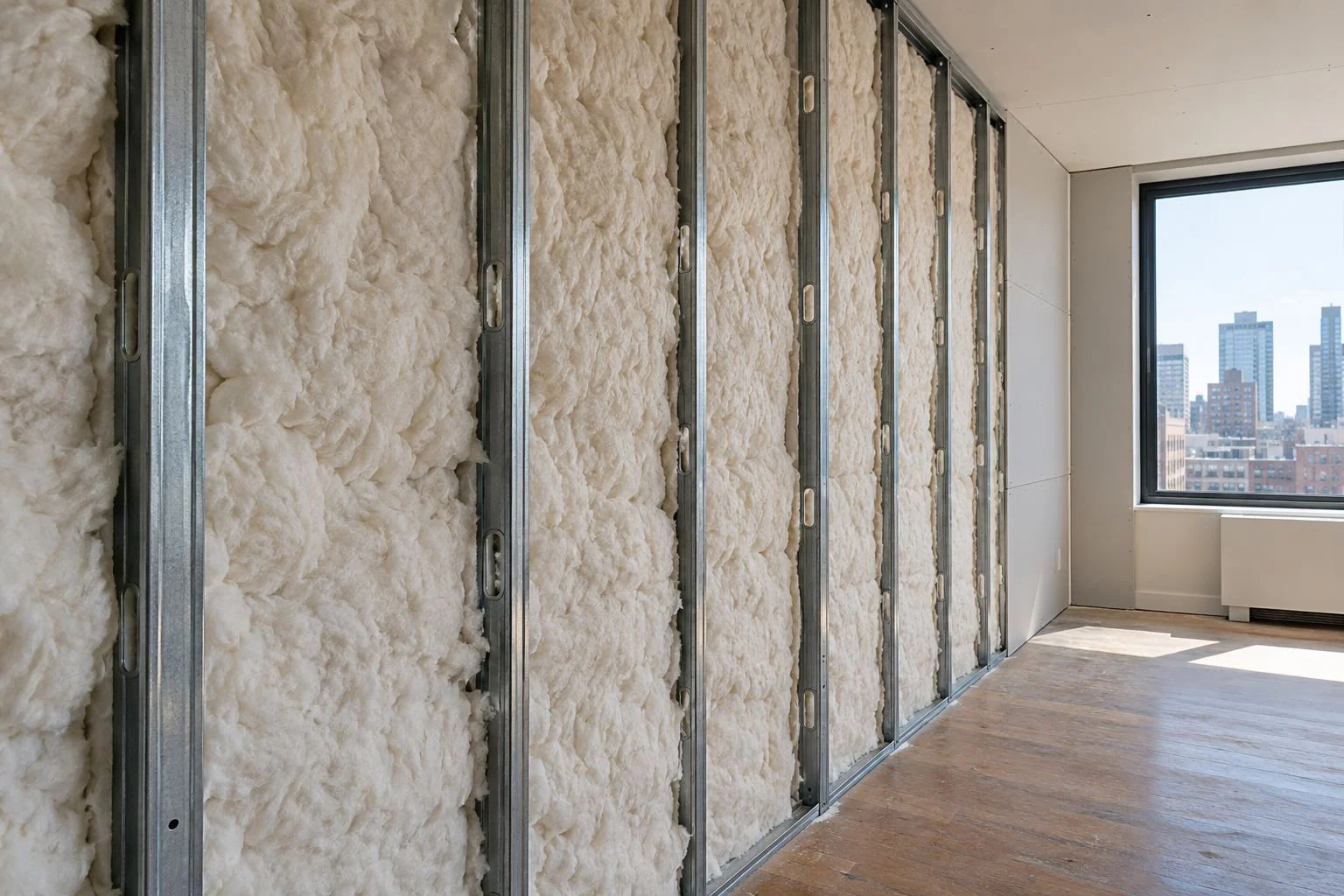
Hearing your neighbor’s conversations through a shared apartment wall can affect your privacy even when both households maintain normal noise levels. We consider the wall’s construction and accessible cavities before recommending apartment noise insulation. Party walls may require additional acoustic layers or approved assembly details. Building management approval may also be necessary before work begins.
Ceiling Sound Insulation
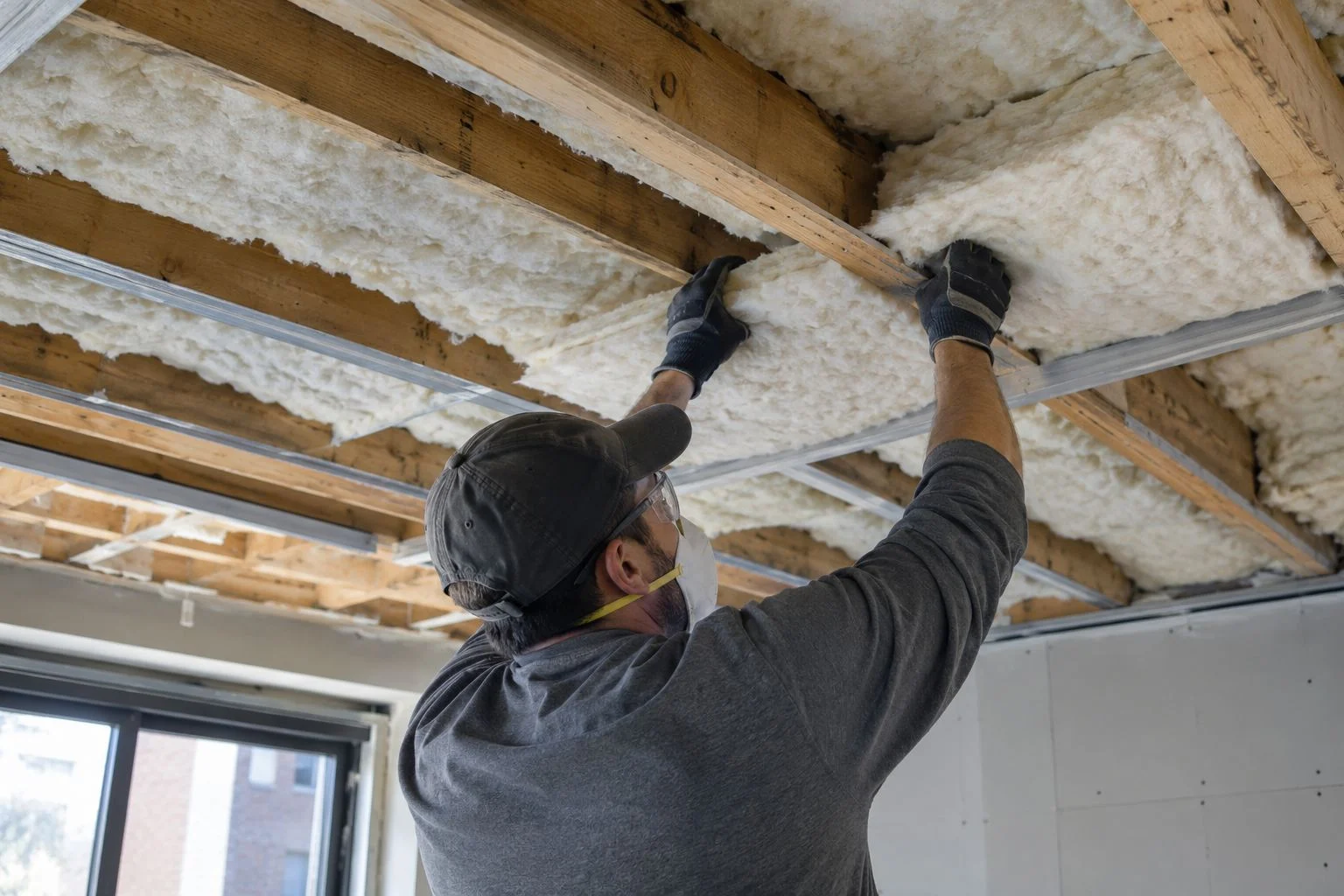
Television noise and conversations from an upstairs room can travel through the ceiling into the space below. Sound-absorbing insulation within suitable ceiling cavities can reduce some of that airborne noise. Our ceiling soundproofing recommendations consider available access, framing, and existing finishes. Heavy footsteps and structural vibrations may require additional measures beyond insulation.

Floor Sound Insulation
Noise between occupied floors can affect bedrooms, living spaces, and home offices. Floor sound insulation may include suitable cavity insulation as part of a larger acoustic assembly. We consider the existing floor construction and whether the problem involves voices or footsteps. Impact noise often needs floor underlayment or other sound-isolation measures rather than cavity insulation alone.
Basement Ceiling Sound Insulation
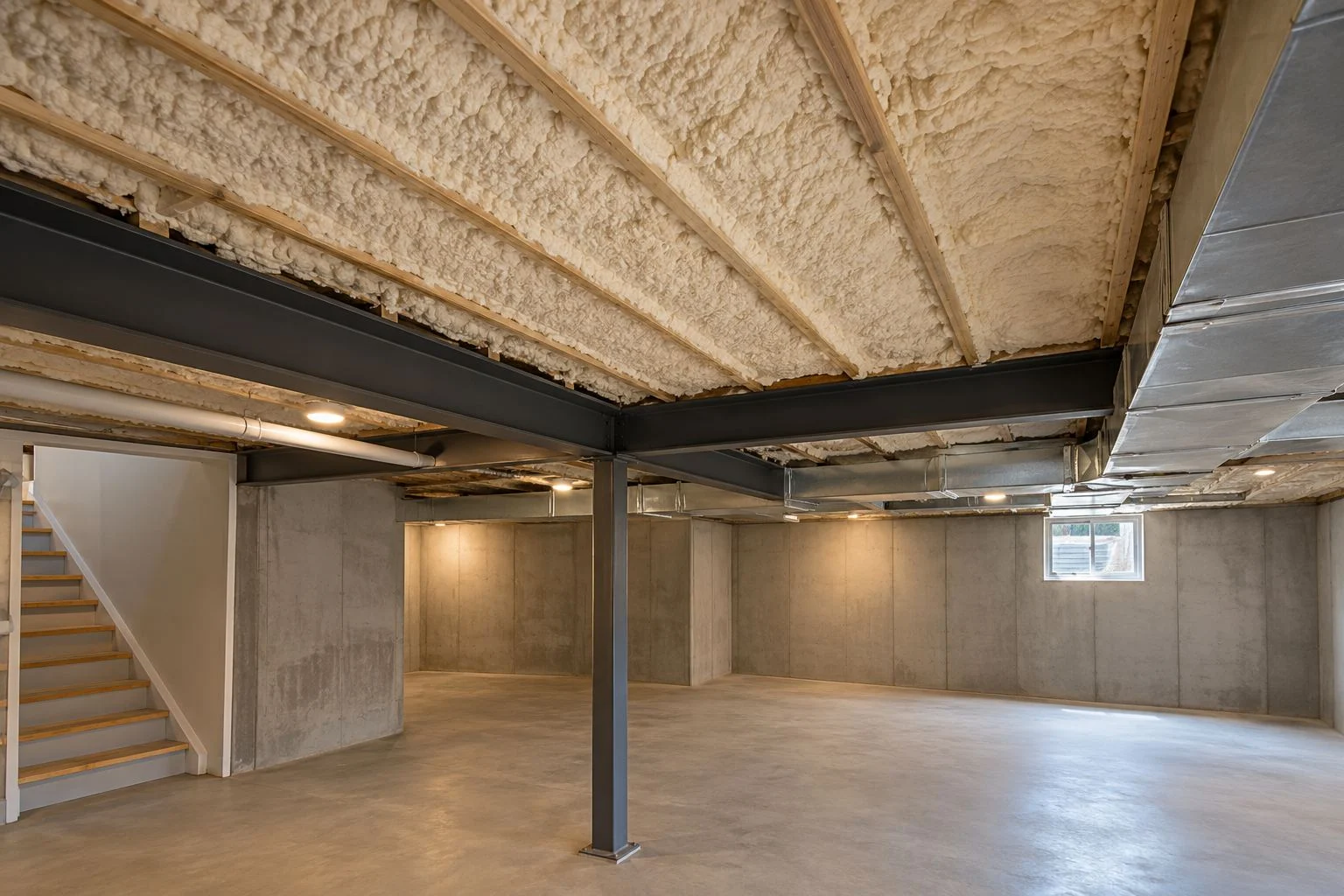
A basement used for television, games, or family activities can send unwanted noise into the rooms above. Suitable insulation between the basement ceiling joists can absorb some airborne sound. Our recommendations account for the ceiling structure, nearby utilities, and access to the cavities. Additional construction measures may be necessary for stronger sound isolation.
Existing Room Sound Insulation Upgrades
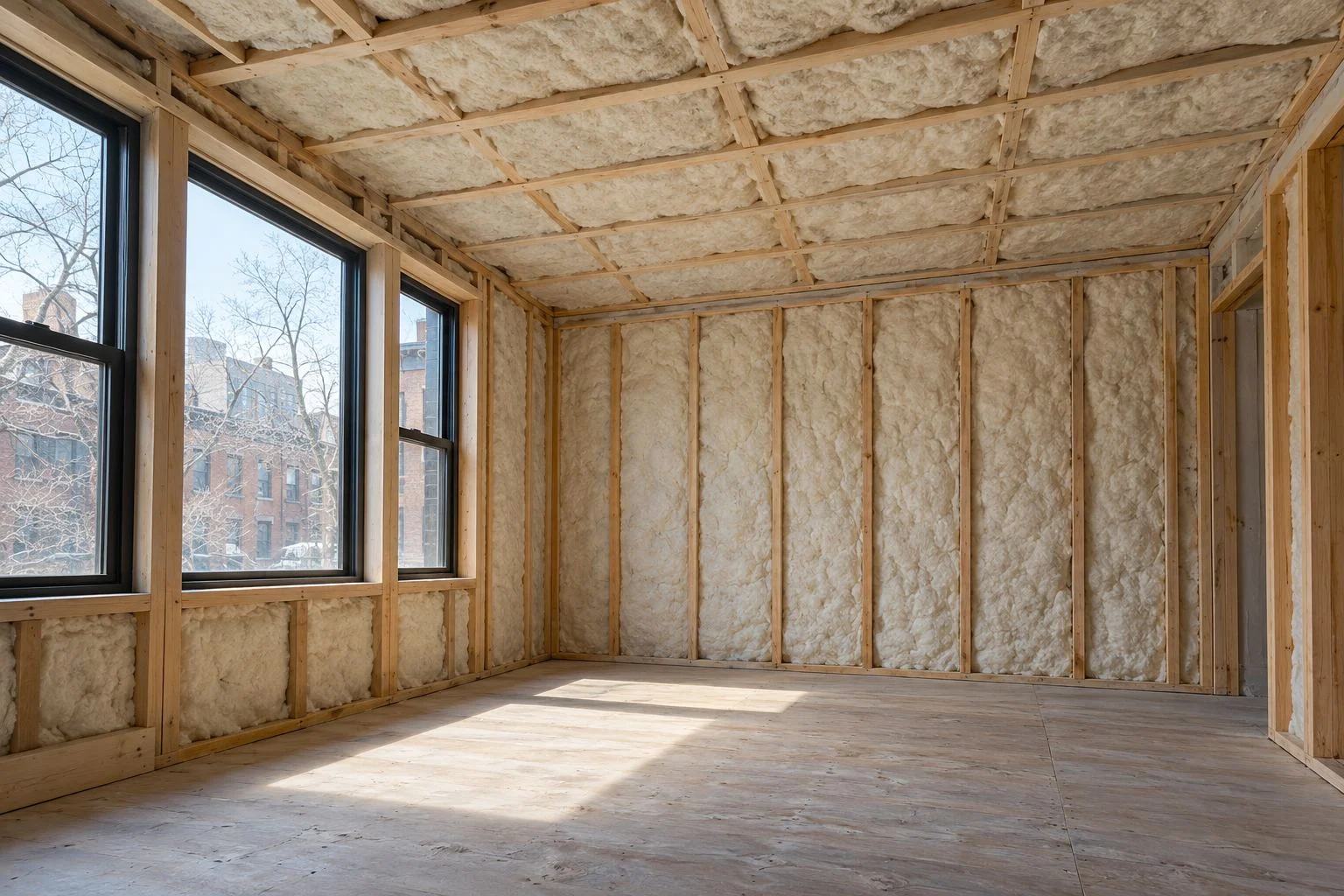
Finished rooms can need better sound control without a complete home renovation. Existing plaster, drywall, and framing determine which insulation methods are practical. We review suitable access points and material options before recommending work. Some projects require wall or ceiling openings, while others may need additional acoustic construction to achieve the intended improvement.
Prime Foam Solution
Our Sound Insulation Work in NYC Homes
Have a Similar Noise Problem at Home?
Tell us which rooms are affected and where the noise comes from. Our insulation team can discuss suitable sound-absorbing materials and the work your property may require.

Prime Foam Solution
Address Noise Problems Before Your Renovation Is Finished
New drywall, ceiling finishes, and flooring can cover cavities that may need sound insulation. Missing the opportunity to address them now could mean additional removal and repair costs later. Plan the necessary acoustic insulation before those areas are closed.
Prime Foam Solution
We Identify Where Noise Travels Before Recommending Insulation
Not every noise complaint needs the same material or installation method. Our recommendations focus on the type of sound and how it enters the affected room.
- Airborne Noise: Conversations, televisions, and music can pass through walls and ceilings. Suitable cavity insulation can improve sound absorption.
- Impact Noise: Footsteps, dropped objects, and furniture movement send vibrations through floors and framing. Additional sound-isolation measures may be required.
- Gaps and Openings: Unsealed joints, electrical openings, and service penetrations can allow sound to pass around insulated areas.
- Window and Door Noise: Outdoor noise entering through glazing, window frames, or door gaps may need separate sealing or window and door improvements.
Prime Foam Solution
Sound-Absorbing Insulation Options We Recommend
Sound control depends on the material and the complete wall, floor, or ceiling assembly. We consider available space, existing construction, and the intended sound reduction before recommending an insulation option.
- Mineral Wool Insulation: Absorbs airborne sound within suitable wall and ceiling cavities.
- Fiberglass Acoustic Insulation: Provides sound absorption in framed partitions and floor-ceiling assemblies.
- Open-Cell Spray Foam: Offers insulation and some acoustic absorption in suitable assemblies, although it is not automatically the best option for sound isolation.
- Cellulose Insulation: Can provide sound absorption within suitable cavities when the building and installation method support its use.
Prime Foam Solution
Installation Process with Focus on Better Sound Absorption
Sound insulation works as part of the wall, floor, or ceiling around it. Our process focuses on the areas selected for treatment, suitable materials, and the requirements of the existing construction.
Review the Noise-Affected Areas
We discuss where the noise is heard and inspect accessible wall, ceiling, or floor areas. The source of the sound and existing construction help determine the proposed insulation work.
Select the Sound Insulation Material
Our team considers available cavity space, framing, and the required acoustic performance before recommending a material. Additional sound-control measures are identified where insulation alone may not be sufficient.
Prepare and Install the Insulation
Work areas receive the necessary preparation before insulation is placed or applied. The selected material is installed within suitable cavities, with attention to framing, utilities, and the requirements of the assembly.
Review the Completed Installation
Accessible treated areas are checked for insulation placement and gaps before finishing work. Cleanup and product-specific safety precautions follow installation. Actual sound isolation depends on the complete assembly, including finishes and any additional acoustic measures.
Prime Foam Solution
Improve Sound Control Without Unnecessary Interior Changes
Noise reduction work can feel like a major commitment when your walls and ceilings are already finished. We understand why homeowners want to know what needs to be opened before they approve an installation.
Work Around Existing Finishes
Our recommendations consider drywall, plaster, trim, and surrounding surfaces when determining installation access. The work scope identifies the areas that may need to be opened.
Choose Suitable Acoustic Improvements
Not every noise concern requires complete wall reconstruction. Some accessible cavities benefit from insulation, while stronger isolation may require additional materials or construction work.
Know the Work Before It Begins
Homeowners receive an explanation of the proposed insulation areas, access requirements, and related finishing work before installation. Building approvals and safety requirements are addressed where applicable.
Prime Foam Solution
Sound Insulation with NYC Building Standards in Mind
New York City building regulations address sound transmission between certain residential units and shared building spaces. At Prime Foam Solution, insulation recommendations account for relevant acoustic, fire safety, and renovation requirements.
- Airborne Sound Control: NYC Building Code Section BC 1207 establishes Sound Transmission Class (STC) requirements for applicable residential wall and floor-ceiling assemblies.
- Impact Noise Requirements: The same code establishes Impact Insulation Class (IIC) requirements for applicable floor-ceiling construction.
- Foam Fire Protection: NYC Building Code Section BC 2603 regulates foam insulation and the protective barriers required in applicable assemblies.
- Apartment Renovation Approvals: Co-op and condominium alteration rules and applicable NYC Department of Buildings permit requirements must be confirmed before work begins.
Prime Foam Solution
Soundproofing Insulation Services Across NYC
Apartments with shared walls, older townhouses, and multifamily homes present different noise-control concerns. Our residential insulation recommendations consider the type of property, the affected rooms, and the construction around them.
Our proposed service areas include:
Need Sound Insulation in Your Neighborhood? Share your property location and the type of noise affecting your home to confirm service availability and discuss suitable options.
- Brooklyn: Williamsburg, Park Slope, Bedford-Stuyvesant, Bay Ridge, and surrounding neighborhoods.
- Manhattan: Upper West Side, Harlem, Chelsea, Washington Heights, and nearby areas.
- Queens: Astoria, Forest Hills, Flushing, Jackson Heights, and neighboring communities.
- The Bronx: Riverdale, Fordham, Kingsbridge, Morris Park, and surrounding areas.
- Staten Island: St. George, New Dorp, Great Kills, Tottenville, and nearby neighborhoods.
Prime Foam Solution
Why Homeowners Choose Prime Foam Solution for Sound Insulation
- Noise-Specific Insulation Recommendations: We consider the sound problem before recommending an insulation material.
- Wall and Ceiling Acoustic Options: Suitable cavity insulation is selected according to the existing construction.
- Airborne and Impact Noise Awareness: Different noise types receive different recommendations rather than the same insulation treatment.
- Apartment Wall Considerations: Shared partitions and building requirements receive attention before work is proposed.
- Material Selection for Sound Absorption: Insulation options are considered based on their acoustic properties and assembly suitability.
- Existing Interior Access Planning: The proposed work accounts for finished walls, ceilings, and necessary openings.
- NYC Sound and Fire Code Awareness: Applicable acoustic and fire protection requirements inform project recommendations.
- Clear Expectations Before Installation: Our team explains what insulation can address and when other sound-control measures may be necessary.

Prime Foam Solution
Frequently Asked Questions
How much does soundproofing insulation cost in NYC?
Soundproofing insulation costs depend on the treated area, material selection, accessibility, and required construction work. An open wall cavity generally requires less preparation than a finished apartment wall or ceiling. Additional drywall, sound-isolation components, or surface repairs may increase the total. A project quote should identify the insulation scope and related work.
What is the best insulation for soundproofing walls?
Mineral wool and fiberglass are common sound-absorbing materials for suitable wall cavities. Their effectiveness depends on the framing, wallboard, and complete wall assembly. Cellulose and certain foam products may suit other applications. The best choice depends on the construction and the type of noise you want to reduce.
Does soundproofing spray foam work between rooms?
Spray foam can absorb some airborne sound in certain wall assemblies, but it does not make rooms completely soundproof. Acoustic testing shows that fiberglass and mineral wool can outperform spray foam in some wall systems. The material should be selected based on the complete assembly rather than its advertised soundproofing properties alone.
Can soundproofing insulation reduce noise from neighbors?
Soundproofing insulation can reduce some airborne noise through suitable shared walls and ceilings. Conversations and television sound may become less noticeable when the complete assembly provides better sound isolation. Footsteps, bass vibrations, and noise through adjoining structures can require other measures. Results depend on the existing building construction.
Can insulation stop footsteps from upstairs?
Insulation alone generally cannot eliminate footsteps from an upstairs apartment. Footsteps create impact vibrations that travel through floor framing and other structural connections. Sound-absorbing insulation may form part of the treatment, but additional floor underlayment, resilient components, or ceiling modifications may be necessary.
Does ceiling soundproofing work in apartments?
Ceiling soundproofing can improve sound isolation when suitable cavity insulation is combined with appropriate construction details. Airborne noise and impact noise require different treatment approaches. The existing ceiling, framing, floor above, and available installation space determine which improvements are practical.
Can insulation be added to finished walls for sound reduction?
Some finished walls can receive suitable cavity insulation through access openings, depending on the material and wall construction. Conventional spray foam generally requires exposed cavities. Other sound-control approaches may require additional drywall or structural separation. The installation method should be confirmed before finished surfaces are disturbed.
Does sound insulation for windows reduce street noise?
Sound insulation within walls does not directly correct noise that enters through window glass, frames, or gaps. Street noise may require better window seals, suitable acoustic glazing, or other window treatments. Insulation remains useful when the surrounding wall assembly is also a significant sound path.
Is soundproof insulation different from ordinary thermal insulation?
Some insulation materials provide both thermal resistance and sound absorption, but acoustic performance depends on the complete assembly. R-value measures resistance to heat flow, not sound transmission. Sound Transmission Class (STC) and Impact Insulation Class (IIC) describe different acoustic performance characteristics of tested assemblies.
Do NYC apartments have soundproofing requirements?
Yes, NYC Building Code Section BC 1207 establishes sound-transmission requirements for certain walls and floor-ceiling assemblies between dwelling units and adjacent spaces. The applicable requirements depend on the building and project scope. Existing buildings and renovations may require different compliance considerations, and co-op or condo approvals may apply.
Prime Foam Solution
Make Privacy a Priority with the Right Sound Insulation
Noise should not determine when you can sleep, work, or enjoy your home. The right insulation approach starts with the rooms affected and the construction that separates them. Prime Foam Solution can discuss suitable sound-absorbing materials and explain the proposed work before you invest in unnecessary acoustic treatments.